|
|
|
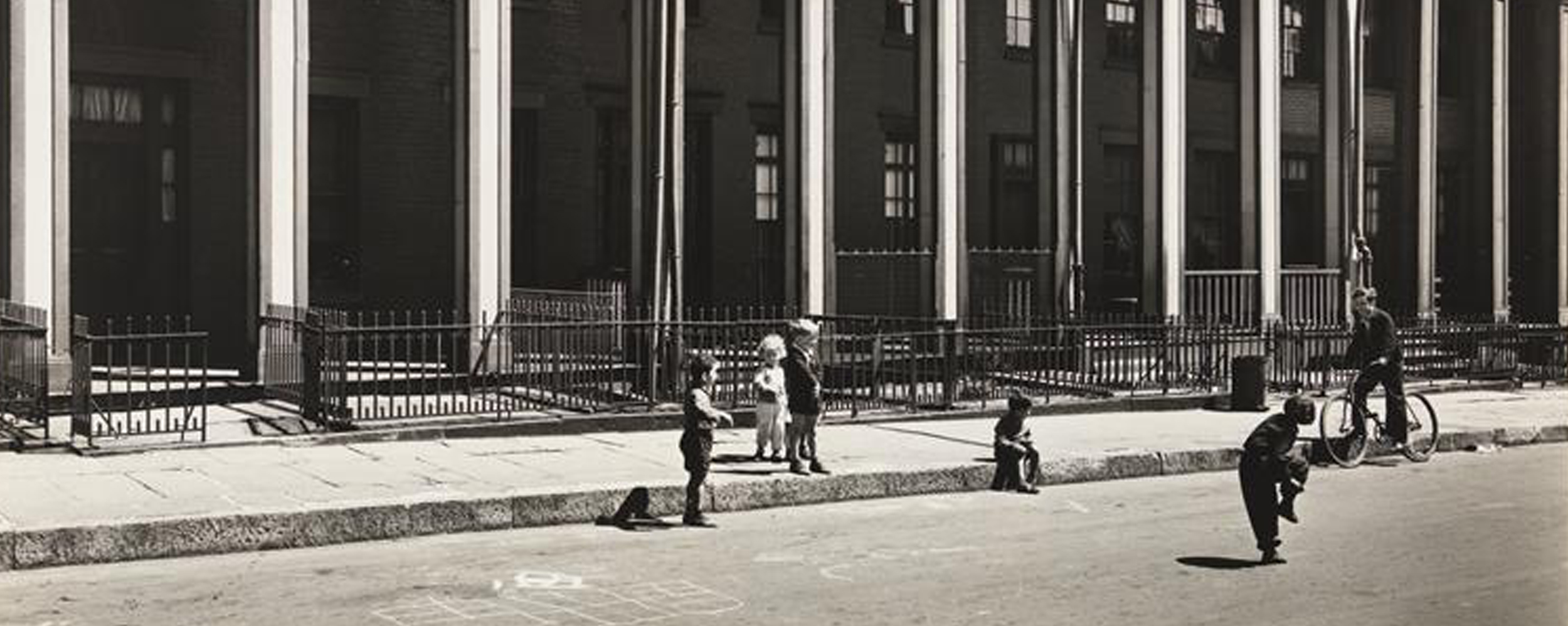
Welcome to the Willowtown Association website!The Willowtown Association is a neighborhood-based organization serving the interests of residents who live from both sides of Hicks Street to Furman Street between Joralemon street and Atlantic Avenue in Brooklyn Heights. Enjoy some of the photos from Willowtown’s Spring Fair.
Following is the text of a proclamation issued by Brooklyn Borough President Marty Markowitz: Whereas, it is a time-honored Brooklyn tradition to recognize those outstanding individuals and organizations dedicated to the betterment of the neighborhoods they serve and the great Borough of Brooklyn; and Whereas, President Craig Bickerstaff and the officers and members of the Willowtown Association–a 56-year-old neighborhood-based organization whose mission is to address the issues that impact the quality of life for residents–have gathered to once again host a spring fair to take note of the organization’s ongoing efforts to ensure the economic vitality, safety, maintenance and sense of community in southwest Brooklyn, and featuring entertainment, food and fun, all in support of the organization’s ongoing endeavors; and Whereas, on behalf of all Brooklynites, I salute President Craig Bickerstaff, spring fair Coordinator Ben Bankson and Linda De Rosa, the officers and members of the Willowtown Association as they host this festive and exciting event that pays tribute to the ‘great heart and mastermind of Brooklyn’s better self,’ Alfred T. White, on the 120th anniversary of the construction of his progressive Riverside Houses, I commend them for their ongoing dedication to improving the quality of life for so many of our residents, and I thank all those present for helping to make Brooklyn a better place to live, work and raise a family. Now, therefore, I, Marty Markowitz, President of the Borough of Brooklyn, do hereby proclaim Saturday, May 16, 2009, Willowtown Association Celebration Day in Brooklyn, USA.” The following remarks were given by Amanda Trees, who was born in Alfred T. White’s progressive Riverside Apartments, as part of a rally opening Willowtown’s annual spring fair May 16, 2009. In dedication to Alfred Tredway White, philanthropist, architect and founder of the Riverside Buildings in Brooklyn Heights, a plaque is being placed today on a tree in the Riverside courtyard to commemorate the original principles and ideals of this very special person. His innovative beliefs gave inspiration and reality to many buildings to follow throughout the world. We are hoping to protect and preserve the healthy trees and foliage in the courtyard, much of which has existed since 1889, and prevent their destruction with attempts to construct a parking garage in their place. Though it has been claimed that new trees will be planted in the places of these phenomenal, wonderful and gentle giants, it is doubtful they will survive the conditions atop a 24/7 garage with vents, constant motion, pollution and inevitable drainage problems. Sometimes it is possible for good things to happen and good causes to win. Though often the odds are against us, we cannot help but continue the struggle as the alternatives are heartless and sad. I remember clearly when I was a baby, sitting in a carriage outside this fountain area in the courtyard and my mother’s singing to me every day. Though we moved when I was still very little, there was a firm memory in my whole being about a magical place I once loved, where something very special and beautiful still lived and I somehow searched to find again. After years of being in the theater and struggling with the problems facing people in the arts in terms of housing conditions and uncertainties, with the help of friends I came back here to live. My mother then told me this was the place I was born–that magical place I remembered from when I was first starting out in the world, my home. It was still here. So was the courtyard and even the swan statue from that time, though it was kidnaped at one point and replaced with another fountain. To picture the destruction of this peaceful, growing grove of huge trees and flowers in the wrought iron circle is unthinkable. These giant trees are our friends. They are the friends of everyone who sees them, walks by them or drives by them on the Brooklyn-Queens Expressway. Instinctively I know that building a garage here would shake everything up and make many problems, possibly insurmountable. In the end what would result would be a destroyed haven. Somehow the garage managed to get by some of the channels. But there’s still hope for us and our wonderful courtyard to be restored honestly and truly, not destroyed. I hope and pray the energies here today will all converge and create a chain of strength that will transcend all of the obstacles and hurdles we face in the preservation of our homes and peaceful courtyard as originally conceived in 1889 by Alfred T. White. The following talk about Willowtown’s “saint,” Alfred T. White, 1846-1921, was given by Bradley Smith, a resident of White’s progressive Riverside Apartments in Willowtown for nearly 50 years, at a rally opening Willowtown’s annual spring fair May 16, 2009. My friends, we are here today to honor Alfred Tredway White and to take a look at his life and legacy. What was the world like when Alfred White was born in 1846? Our United States was scarcely 60 years old. Still America offered the prospect of life, liberty and the pursuit of happiness to the poverty stricken and to the persecuted. In the cities of Brooklyn and New York entrepreneurs were pursuing their particular brand of happiness with a vengeance. The rich got richer, while the poor…. Well, the Whites were rich. Alfred White’s childhood home, a palatial mansion, still stands at No. 2 Pierrepont Place in Brooklyn Heights. There were those individuals and families like the Whites who firmly believed that with wealth comes responsibility. These Unitarians took to heart the biblical admonition that from those to whom much is given, much is required. We’ll only mention in passing White’s work with the Children’s Aid Society, the Brooklyn Society for the Prevention of Cruelty to Children, the Brooklyn Bureau of Charities and the Brooklyn Botanic Garden. We’ll also only mention in passing White’s putting up the Willow Place Chapel in 1876 and its Columbia House addition in 1906. We will focus on White’s pioneering work in the field of housing for the working poor. There were settlement houses, settlement schools, sanitariums and hospitals set up specifically for the poor. The poor desperately needed some sort of schooling and training for some sort of work, some place to live and some place to die. And die they did–of cholera, tuberculosis, typhoid fever and yellow fever. The filthy, feckless poor were crammed together in filthy, rate-infested tenements. We do well to recall that it was not until 1901 that a New York City law was passed mandating one indoor water closet for every two families in any given tenement building. The constitutionality of this law was questioned by unscrupulous building owners who insisted they were entitled to a minimum 40 percent return on their investments. Hopefully they could collect an exorbitant 100 percent return or even more to be squeezed out of the unfortunate, unwashed, unworthy, underclass tenants. But Alfred T. White, buttressed by his firm religious convictions and his direct contacts with the hard-working, hard-pressed poor, realized there simply had to be decent housing provided for them. There were model tenements in London, England. White reasoned that there could and should also be model tenements in Brooklyn. White invested his own money, anticipating a reasonable return of 5 percent–philanthropy plus 5 percent. In 1877 White’s Home Buildings opened in Cobble Hill. In 1878 and 1879 White’s Tower Buildings were erected, also in Cobble Hill. And in 1890 White’s Riverside Buildings were completed in Brooklyn Heights. Philanthropy plus 5 percent proved entirely feasible. These sturdy brick buildings had outside, fireproof staircases. Inside each apartment had its own sink, its own wash tray and its own water closet. And the innovative idea that sunlight, fresh air, green trees and park space should be incorporated into the very fabric of tenements was nothing short of shocking to some. More than 100 years later we all realize the tremendous importance of sensible civic planning–planning for affordable public as well as private housing, housing projects with park space and playgrounds, such as were pioneered by Alfred T. White. Today we ask ourselves how in our time we can preserve and promote the ideas and ideals initiated in his time by Alfred T. White. |
|
|
|
|